The Lighthouse
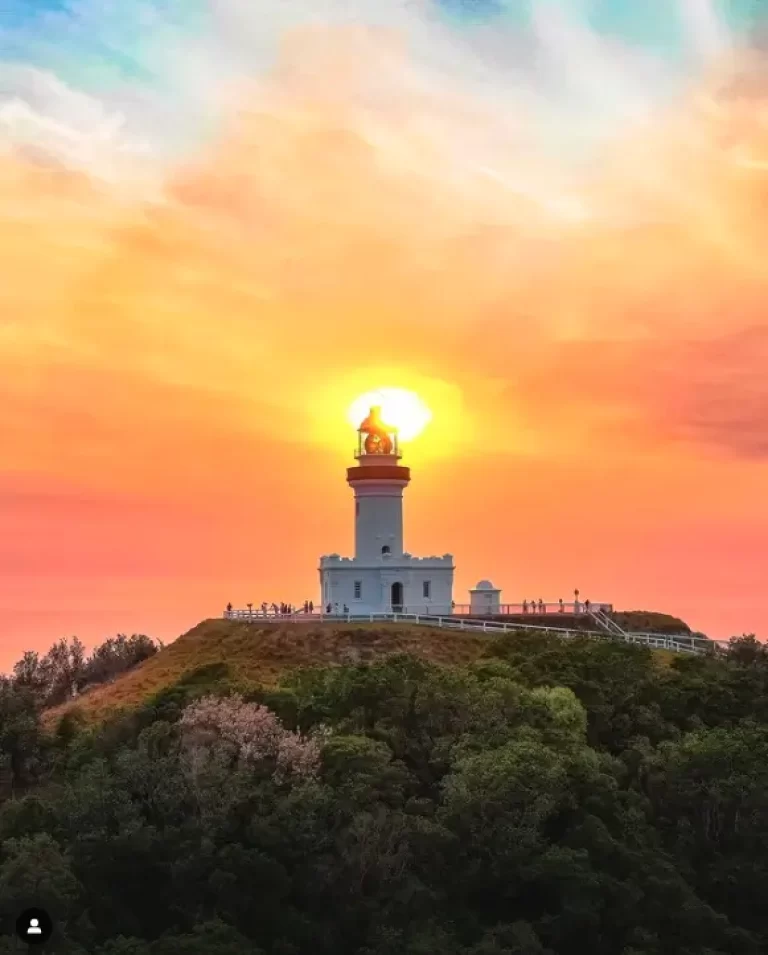
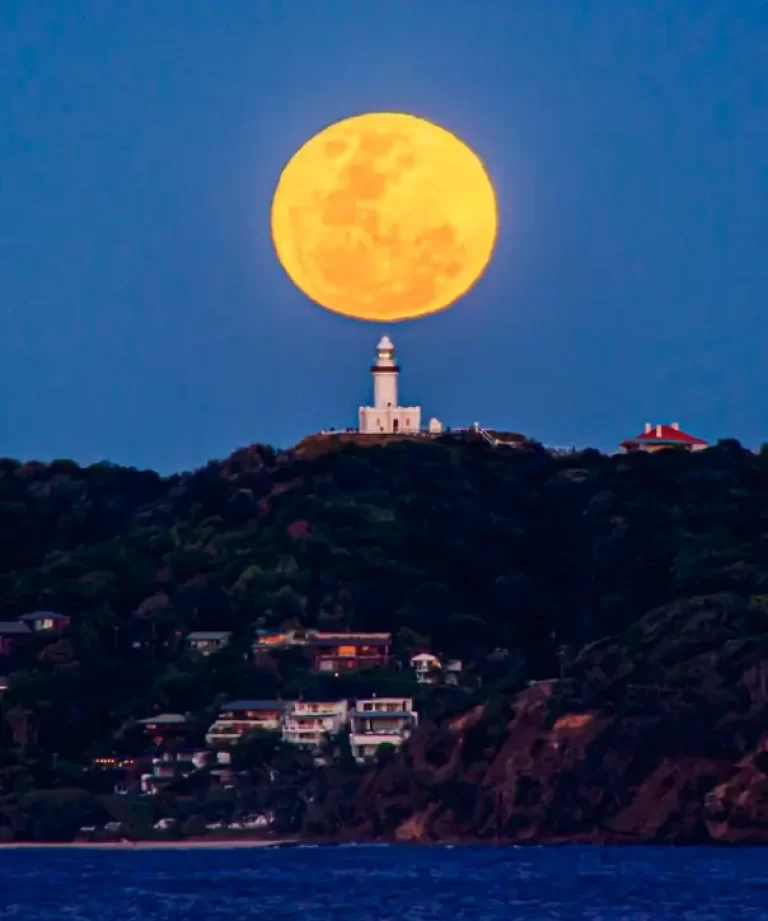
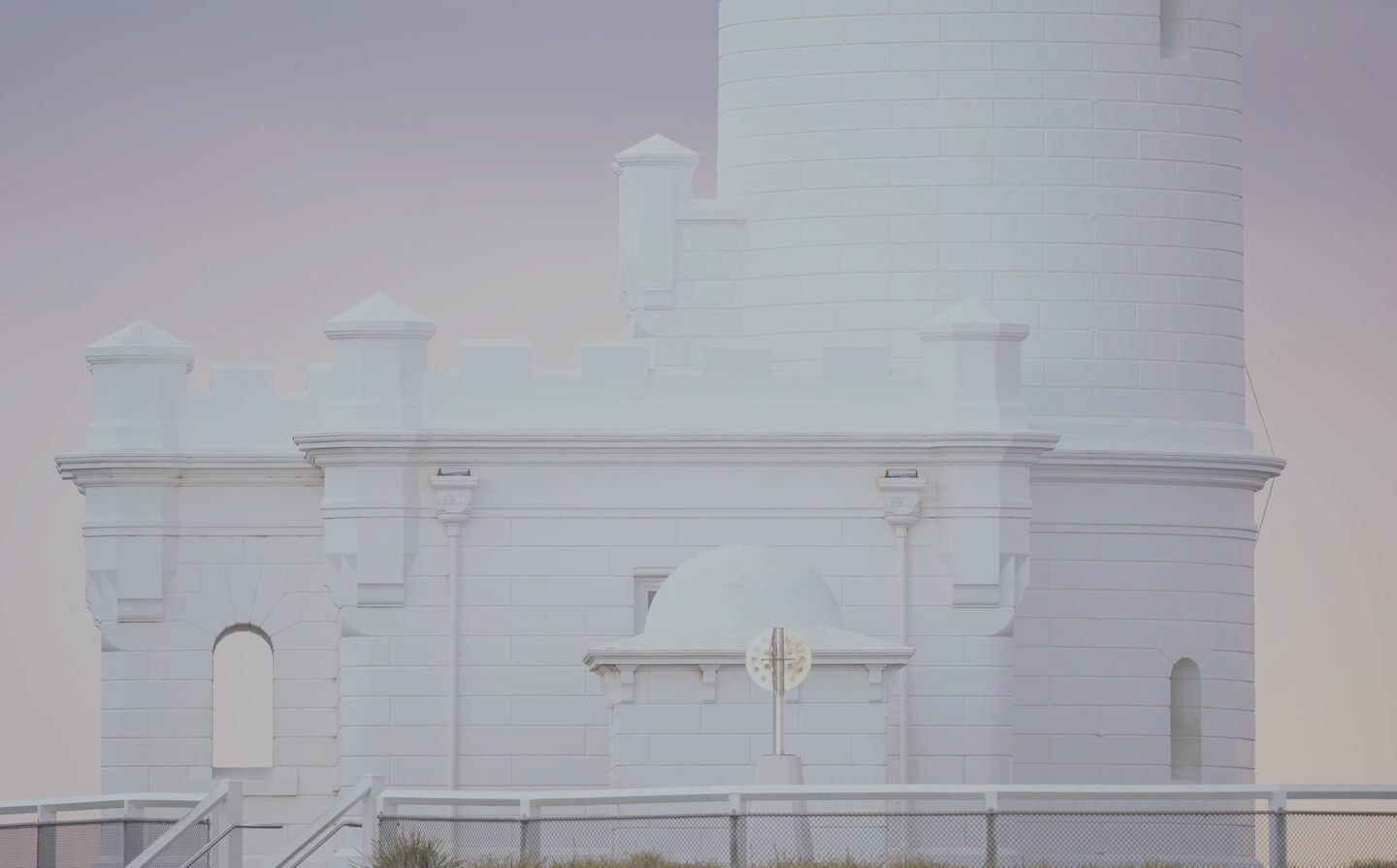
Constructed of prefabricated concrete blocks in 1901, the Cape Byron Lighthouse stands on the most eastery point of the Australian mainland and is Australia’s most easterly lighthouse.
It is built in the James Barnet style, by his successor, Charles Harding. James Barnet, the New South Wales colonial architect, was renown for his towers having large ornate crowns and are easily distinguished.
The first-order optical lens, which weighs 8 tons, was made by the French company, Societe des Establishment, Henry Lepante, Paris. It contains 760 pieces of highly polished prismatic glass.
The original concentric six wick burner was 145,000 cd. This was replaced in 1922 by a vapourised kerosene mantle burner gave an of 500,000 cd.
In 1956 the light became Australia’s most powerful, at 2,200,00 cd when it was converted to mains electricity. At the same time the clock mechanism was replaced by an electric motor.
An auxiliary fixed red light is also exhibited from the tower to cover Juan and Julian Rocks to the north east.
A great banquet was arranged for the opening in 1901 and many dignitaries, including the NSW Premier of the day John See, were invited. However due to adverse weather conditions the premiers ship was delayed by till the following day and the banquet was held without him. The opening by the Premier took place a day late on the Sunday.
It is interesting to note that Cape Byron was named by Captain Cook after John Byron, grandfather of the famous poet. note: see original land ownership info.
byron bay lighthouse images
![]() |
![]() |
![]() |
![]() |
![]() |
![]() |
![]() |
![]() |
![]() |
![]() |
![]() |
![]() |
the goanna is the totem of the bunjalung people of northern N.S.W. australia the true custodians of byron bay.
Byron Bay Lighthouse Images taken by Darren McCoy at the 2005 Artscape Exibition